Dino Transform Robot Games
- 3.5
- Rating
- 10.00M
- Installs
- Free
- Price
 Analysis by App-foxy
Some mobile games reveal their limits within a few minutes, while others become more enjoyable once you understand how their different ideas fit together. Dino Transform Robot Games sits somewhere in between. It is a free strategy game from Robot Life Games that mixes dinosaur imagery, robot combat, driving, and transformation-focused action. I found it most interesting when I treated each encounter as a small planning problem rather than simply rushing toward every target.
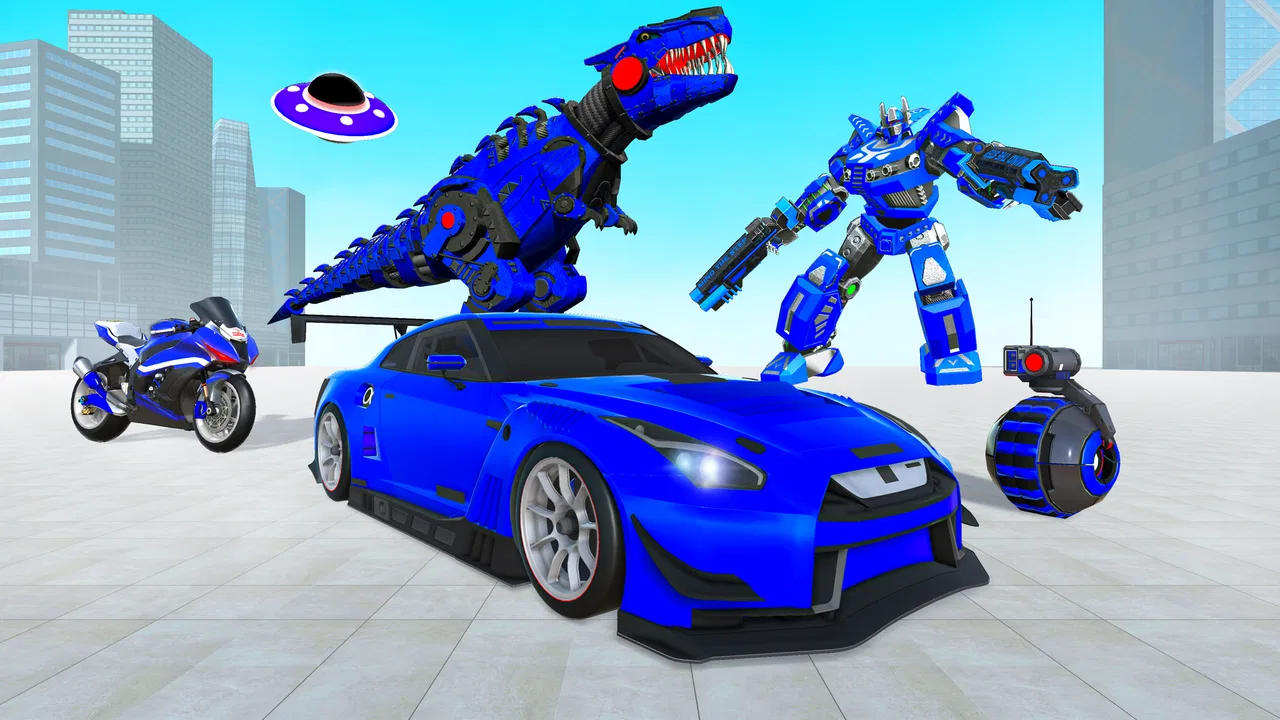
The central appeal is easy to understand: you control a machine that can feel like a dinosaur, a robot, or a vehicle depending on the situation. That combination gives the game a louder, more playful identity than a traditional turn-based strategy title. It is aimed at players who enjoy quick action and the fantasy of controlling a transforming machine, but it still asks you to think about positioning, timing, and which form is useful at a particular moment.
Its average rating is 3.5 from around 4.9 thousand ratings, and the game has passed 10 million installs. Those figures suggest a broad audience, but they also hint at a divided experience. My own impression is that the game works best when you want accessible robot action with a light strategic layer, not when you are searching for a deeply system-driven strategy game with extensive planning tools.
You May Also Like

 Blood Strike: 2.5 Anniversary
Blood Strike’s Loadouts Turn Every Drop Into a Tactical Gamble
A close look at Blood Strike’s custom loadouts: how fast access to signature weapons reshapes its battle royale rhythm, rewards preparation, and narrows the gap between fights.

 Pandora - Music & Podcasts
Pandora’s Music Is Easy to Start, but Harder to Recover
Pandora’s strength is its low-effort path from a seed to a station. Its weak spot is how much confidence it asks you to place in connection, setup, and quiet recovery.

 8 Ball Pool
 Is Built on Rivalries, Rematches, and Routine
A close look at the rivalries, rematches, shared routines, and unanswered safety questions that turn a quick pool match into a persistent mobile community.

 Samsung Music
’s Quiet Strength Is Playing What You Already Own
Its reach comes less from spectacle than from dependable access to a personal library. That simplicity is both the app’s strongest retention engine and its ceiling.

 AccuWeather: Weather Radar
AccuWeather Review: A Quick, Clear Forecast for Everyday Decisions
For everyday plans, the best forecast is the one you can understand quickly. AccuWeather makes rain timing, radar, and local conditions easy to act on, with a few trade-offs.

 Hill Climb Racing
Why Hill Climb Racing Still Turns Crashes Into One More Run
A tiny car, a bumpy hill and one more upgrade: Hill Climb Racing keeps resurfacing because its simple chaos makes every near-miss feel personal.
More From Our News Desk



How the transformation idea shapes each decision
The most important decision is not simply whether to attack. It is deciding which identity of the machine gives you the best chance of handling what is in front of you. A dinosaur-like form supports the fantasy and makes encounters feel more physical, while the robot side makes the combat premise clearer. The car form changes the rhythm by making movement and travel feel more prominent. Even without turning the game into a complex strategy simulation, these changes give the player reasons to pause before acting.
I recommend learning to separate movement decisions from attack decisions. When I moved immediately toward an opponent, I sometimes created a less comfortable engagement than when I first used the available space to approach from a better angle. This is a small habit, but it makes the experience feel more deliberate. The game is not asking for a long-term campaign plan at every moment; it rewards short planning horizons, where the next few actions matter more than an elaborate build order.
That makes it approachable for younger players and for anyone who likes action games but wants a little more thought than constant button pressing. The Teen content rating is worth keeping in mind for families, especially because the presentation revolves around robot and dinosaur combat. I would not describe it as a quiet puzzle game. Its identity is built around action, confrontation, and transforming machines.
One useful way to play is to assign each form a job in your head. Instead of changing randomly, I used the vehicle form when I wanted to cover ground, then switched my attention back to the combat-oriented forms once I was ready to engage. This creates a simple workflow: travel efficiently, assess the encounter, choose the form that best fits the immediate problem, and only then commit to the fight.
The strongest strategic habit is choosing a form before the situation becomes urgent. Waiting until an opponent is already close can make the transformation feel reactive. Anticipating the next few seconds gives the mechanic more value and makes the game feel less like a collection of animations.
Why the driving element matters
The car component is more than a cosmetic change because it gives movement a different purpose. In many robot games, getting from one point to another is just a pause between fights. Here, driving helps break up the combat rhythm and provides a reason to think about routes and approach. I found that this was especially useful during short play sessions, because the game could shift from travel to action without requiring a long commitment.
Still, players should not expect a dedicated racing game. The driving idea supports the transforming-robot fantasy rather than replacing the strategy and combat focus. If you want detailed vehicle handling, competitive racing lines, or a large driving simulation, this is not the right alternative. Its vehicle play is best understood as one tool in the larger action loop.
Risk and reward in a fast mobile format
The game’s risk-and-reward decisions are relatively immediate. Moving aggressively can keep the action flowing, but it can also leave less room to react. Playing cautiously gives you more time to observe, yet it may make the experience feel slower than intended. I enjoyed the game more after accepting that not every encounter needed the same tempo.
For a simple opponent or a familiar situation, I could afford to act quickly. When the scene felt less predictable, I preferred to preserve space and avoid committing to a transformation too early. That distinction is useful because it prevents the game from becoming a repetitive sequence of rushing forward and attacking. The strategic layer is light, but it is present in the way you manage exposure and timing.
A practical approach is to keep one decision in reserve. Rather than using every movement or transformation immediately, I tried to leave myself an option for retreating, changing form, or repositioning. This is a small counterplay principle: if you spend all your flexibility at once, the opponent or environment gets to dictate what happens next. The game does not need a complicated skill tree for this idea to matter.
The trade-off is that the game can feel less satisfying to players who want clearly explained, highly measurable advantages. Its strategy is expressed through action and situation rather than through a large collection of visible statistics. I could make sensible choices, but I did not experience the kind of detailed planning found in more traditional strategy games where every unit, resource, and upgrade has a carefully documented role.
That limitation is also part of its accessibility. A newcomer can understand the basic fantasy quickly without studying a long manual. Someone who expects a competitive strategy environment may find the decision space too narrow. I would recommend it to a player who wants moment-to-moment choices, not to someone who wants to spend most of a session designing a complex plan before the action begins.
Adapting when the first plan stops working
Adaptation is where the game becomes more interesting than its short description suggests. The first plan I formed for an encounter was not always the best one once movement, distance, and pressure changed. Rather than treating a failed approach as a reason to restart immediately, I found it more useful to examine what went wrong. Did I choose a form because it looked exciting, or because it actually helped with the next problem? Did I drive directly into danger without leaving space to respond?
This kind of self-correction is especially valuable for players who are new to action strategy games. The game gives you a simple setting in which to practice reading situations. You can experiment with approaching quickly, keeping distance, or switching forms at different moments. The lessons are modest, but they transfer well to other games: do not confuse speed with progress, and do not assume the first available attack is automatically the best one.
I also suggest changing only one part of your approach at a time. If you alter movement, form choice, and attack timing simultaneously, it becomes difficult to understand what helped. A more useful routine is to keep your route similar while testing a different transformation, or keep the form constant while changing when you engage. This turns casual play into a simple learning process without making the game feel like homework.
The game is not ideal for players who dislike repeating an approach to understand it. Its strategic value comes from noticing patterns and refining decisions, so someone looking for a purely relaxing experience may prefer a less demanding arcade game. On the other hand, players who enjoy gradually becoming more efficient can find satisfaction in making the same type of encounter feel smoother after a few attempts.
What remains engaging over longer play
Over time, the question is whether the transformation concept continues to provide meaningful choices or becomes a visual novelty. In my experience, it stays enjoyable when I deliberately use the forms for different purposes. If I treated every change as a flashy button press, the loop became predictable. If I thought about travel, approach, and engagement separately, the same basic ingredients offered more room for improvement.
That depth has a ceiling. Dino Transform Robot Games is not built around the broad strategic layers of a large-scale strategy title. I would not choose it for resource management, elaborate faction planning, or long-term competitive theory. Its depth comes from execution and situational judgment, which makes it better suited to short sessions and casual experimentation than to players who want a game that can occupy their attention through complex campaign planning.
This distinction matters when comparing it with the usual alternatives. A standard action game may offer more direct combat polish but no reason to think about changing roles. A dedicated racing game will usually provide more detailed driving, while a conventional strategy game will offer more systems to plan around. This title trades some specialization in each area for the novelty of combining dinosaur, robot, and car identities in one experience.
That trade-off is the reason I would recommend it to a friend who enjoys unusual mobile game combinations. It is also the reason I would warn a strategy specialist before suggesting it. The game’s appeal is breadth of fantasy rather than exceptional depth in one genre. You get a playful hybrid, not a replacement for a serious strategy campaign or a focused driving game.
The current version is 10.9, and it runs on devices using Android 7.0 or later. That makes the compatibility requirement relevant for anyone using an older phone or tablet. I would check the device requirement before planning to play on an older handset, particularly if the game is intended for a child’s device or a spare phone. The game is free, which makes trying it straightforward, although free access alone does not guarantee that every player will enjoy its particular blend of action and strategy.
Who should play it, and who should skip it?
I think it is a good fit for players who like transforming machines, dinosaur-themed action, and short sessions where the next decision is easy to understand. It can also work for someone who is curious about strategy but does not want to begin with a dense game full of menus and long explanations. The basic premise is immediately readable, and the movement between driving and combat gives the experience a distinct personality.
It is less suitable for anyone seeking a calm, non-combat game, a realistic driving experience, or a highly competitive strategy system. I would also steer away from it if your main priority is extensive long-term progression and carefully balanced tactical complexity. In those cases, a focused strategy title is likely to offer a richer decision tree, while a dedicated vehicle game will better satisfy a need for driving depth.
For an everyday scenario, imagine having a short break and wanting something more interactive than a puzzle but less demanding than a long strategy campaign. I would start a session by using the car form to move through the environment, then slow down before an encounter rather than entering at full speed. After identifying the immediate threat, I would choose the form that seemed most practical, keep an escape option available, and treat the first attempt as information if the approach failed. That routine fits the game’s strengths without asking it to be something it is not.
For parents, the Teen rating should guide the decision more than the colorful robot presentation alone. I would consider the child’s comfort with combat-themed play and supervise the first session if there is any uncertainty. For older players, the main question is not whether the game is technically accessible, but whether its simple strategic layer is enough to hold attention after the novelty of transforming wears off.
My strategy verdict
Dino Transform Robot Games is a free hybrid action strategy game with a clear hook and a modest but useful decision layer. Robot Life Games has built its identity around the contrast between dinosaur power, robot combat, and vehicle movement. I enjoyed it most when I planned a few actions ahead, used driving for positioning rather than treating it as decoration, and changed forms with a purpose.
Its weaknesses are equally clear. The strategy is not deep enough for players who want complex campaigns, detailed resource decisions, or a highly competitive environment. The driving element should not be mistaken for a full racing experience, and the transformation mechanic becomes less interesting if used without thought. Those are not deal-breakers, but they define the audience.
With around 10 million installs, the game has clearly reached a large mobile audience, while its 3.5 average shows that its unusual mix will not suit everyone. My recommendation is conditional but positive: try it if you want a quick, accessible game built around choosing between movement and combat identities. Skip it if you need specialized depth in racing or strategy. For the right player, the fun comes from turning a simple robot-dinosaur fantasy into a small exercise in timing, positioning, and adaptation.
FAQs for Dino Transform Robot Games
01What is the main objective of Dino Transform Robot Games?
Dino Transform Robot Games is an action-packed game where players take on the role of transforming robots that can morph into dinosaurs. The main objective is to complete missions, defeat enemies, and explore various levels. Players enjoy the thrill of strategizing transformations to tackle different challenges effectively.
02Are there any in-app purchases in Dino Transform Robot Games?
Yes, Dino Transform Robot Games offers in-app purchases. Players can buy upgrades, skins, and power-ups to enhance their gameplay experience. While the game itself is free to download, these optional purchases can help players progress faster or customize their robots and dinosaurs.
03Is Dino Transform Robot Games suitable for children?
Dino Transform Robot Games is designed for players of all ages, but it contains mild action and combat elements. Parents should review the game content to ensure it aligns with their children’s age and sensitivities. The game promotes strategic thinking and problem-solving, making it both fun and educational.
04Can Dino Transform Robot Games be played offline?
Dino Transform Robot Games requires an internet connection for certain features, such as updates and accessing leaderboards. However, many levels can be played offline, allowing players to enjoy the game without an internet connection, making it convenient for travel or areas with limited connectivity.
05How often are new updates released for Dino Transform Robot Games?
The developers regularly release updates for Dino Transform Robot Games to introduce new levels, characters, and features. Updates also include bug fixes and improvements based on player feedback. It’s recommended to keep the game updated to enjoy the latest content and enhancements.
Pros
- Engaging gameplay with diverse transformations.
- Smooth graphics enhance the player's experience.
- Multiple levels keep the game interesting.
- Easy controls suitable for all ages.
- Frequent updates with new features.
Cons
- In-app purchases can be expensive.
- Occasional ads disrupt gameplay flow.
- Some levels are repetitive.
- Requires a stable internet connection.
- Limited customization options for robots.

Dino Transform Robot Games
Gallery